 IN-X Machine, Inc.
 In product development, speed matters, but so does accuracy. That is why rapid cnc prototyping is such a valuable tool for manufacturers that need to move from concept to a physical part efficiently. A prototype should do more than look right. It should also give teams a dependable way to evaluate design, fit, and function before moving into larger-scale production.
At IN-X Machine, rapid cnc prototyping is centered on both speed and precision. CNC machining uses computer-controlled equipment to create parts based on digital instructions, helping manufacturers produce prototypes that closely match the intended design. This is especially useful when a project requires tight tolerances, repeatable results, and a faster path toward production.
Why Speed Matters Early
One of the biggest benefits of rapid cnc prototyping is that it helps reduce delays early in development. A faster turnaround allows teams to review parts sooner, identify issues earlier, and make changes before too much time or cost is invested in the wrong design direction.
That can make the development process more efficient from the start. Instead of waiting through slower manual methods, manufacturers can move from design file to finished part more quickly and keep projects moving forward.
Precision Still Has to Come First
Speed only matters if the prototype is reliable. We highlight speed and reliability as major advantages of our CNC prototyping services. Because the machining process follows programmed instructions, prototype parts can be produced with a high level of consistency.
This tool can achieve modifications up to .001 inches. That level of precision helps teams evaluate whether a part will perform as expected in a real application. When dimensions are closely controlled, it becomes easier to test part interaction, confirm design intent, and make informed decisions about what should happen next.
Why Rapid CNC Prototyping Stands Out
A big part of the value of rapid cnc prototyping comes from how it combines efficiency with technical control. Instead of relying on slower manual processes, CNC machining can create precise parts more efficiently while maintaining repeatability.
Some of the key advantages include: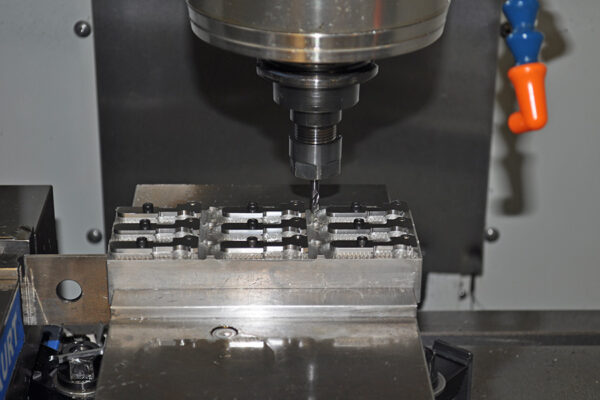
- faster turnaround from design to finished part
- repeatable quality across multiple prototype pieces
- tight tolerances for fit and function testing
- less dependence on labor-intensive manual work
- a smoother path into future production runs
Repeatability is especially important. If early parts vary too much, it becomes harder to tell whether a problem comes from the design itself or from inconsistency in the build process. More consistent results help reduce that uncertainty.
How It Connects to Production
We also emphasise that rapid cnc prototyping can support a seamless transition into mass production. This is one of the strongest reasons many manufacturers choose CNC machining at the prototype stage. When machines are already calibrated for the product, moving into larger production runs can be faster and more efficient.
That production connection matters for a few reasons:
- It helps reduce delays between prototype approval and manufacturing.
- It supports better consistency when scaling up.
- It makes the overall workflow more efficient from start to finish.
For companies trying to bring products to market efficiently, that is a major advantage. Some prototyping methods work well for simple concept models, but they may not offer the same production-ready foundation.
Why It Supports Better Decisions
The value of this application goes beyond getting a part quickly. It helps teams test more confidently, refine designs more effectively, and prepare for production with fewer surprises. When a prototype is produced with speed, precision, and repeatability, it becomes a stronger tool for decision-making.
For manufacturers looking to shorten development timelines without giving up quality, rapid cnc prototyping offers a practical balance. It supports faster progress during development while creating a smoother path toward production once the design is approved. With IN-X Machine, that process is backed by a focus on precision, reliability, and a more efficient transition from prototype work into production.